Operations software for haulers
Built by a hauler. You get the source.
Strata runs the scale house, the money and the phones for transfer stations, MRFs, landfills and aggregates yards. One person builds it, a former roll-off driver, and every customer gets the code it runs on. The pricing is flat and fair, and the company is not for sale.
1 of 5 spots taken. 4 open. After that, a waitlist.
In production at our founding customer in Clark County, Nevada: a landfill, three transfer stations and about 100 trucks.
How it startedEvery kind of scale
If it crosses a scale, Strata can ticket it.
Transfer stations
Two weights or one on a stored tare. Your own material list for each site. Loads going out to the landfill or recycler on the same screen. A fuel surcharge per site, sales tax figured line by line, and truck and trailer weighed separately.
MRFs and recycling
Inbound by material, outbound to the vendor that buys it. A review list for whoever checks the day’s tickets, and a record of every weight that shows whether it came off the scale or was typed in. Nobody can quietly change it.
Aggregates and rock yards
Load out sold by the ton or by the yard, with densities per material. Charge on the way in, a minimum charge for small loads, and a receipt in the driver’s hand before the truck leaves the scale.
Landfills
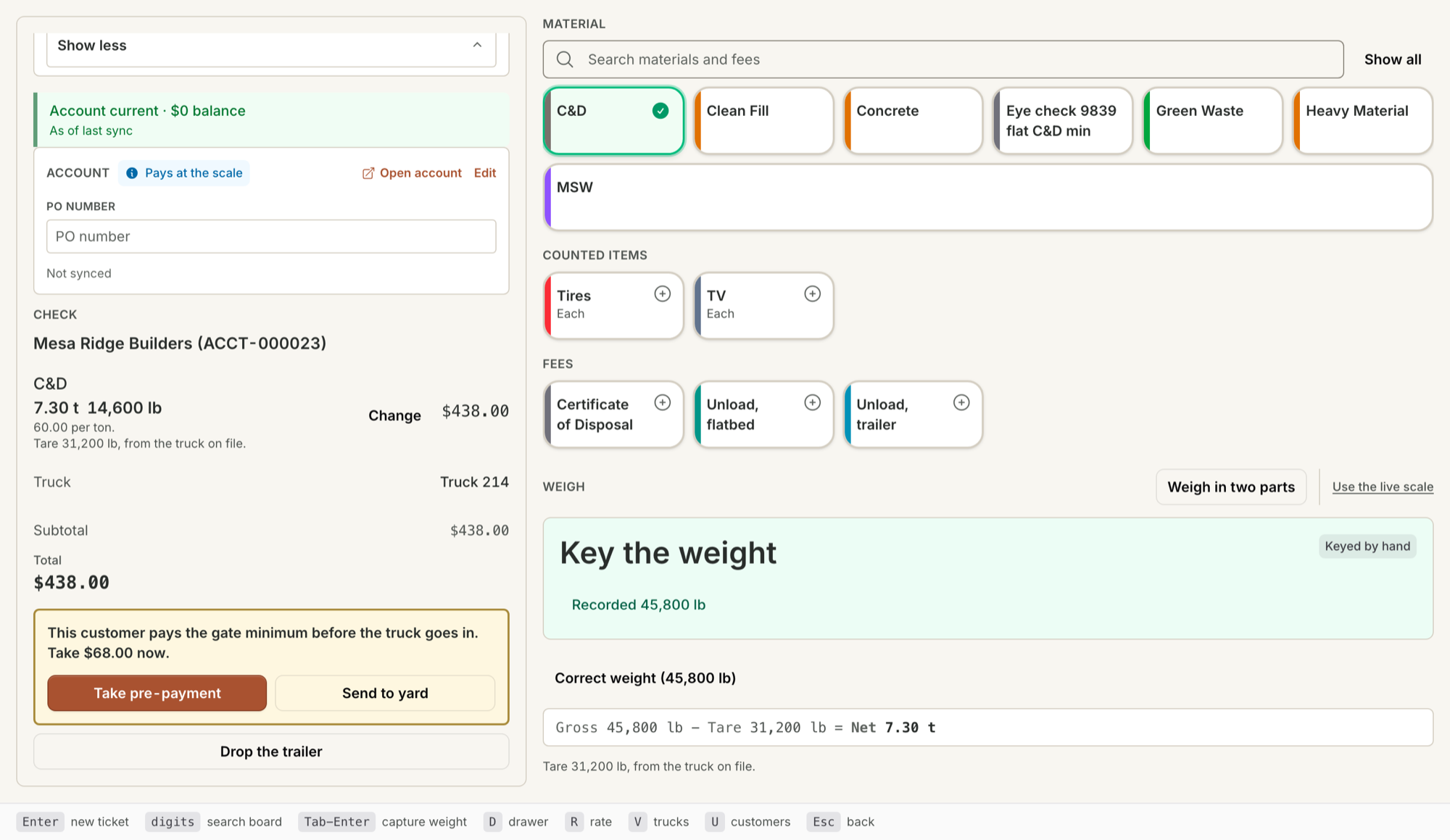
Minimum charges at the gate, per-item charges for tires and appliances, Certificates of Disposal, and a photo of the load before the ticket prints. Daily invoices for cash-on-delivery accounts, charged to the card on file.
What runs today
Built on a working floor, not in a pitch deck.
Every piece below was built with a real operation, shipped turned off, and switched on when it was ready. Strata also works beside the billing system you already have, so nothing has to be ripped out on day one.
The scale house
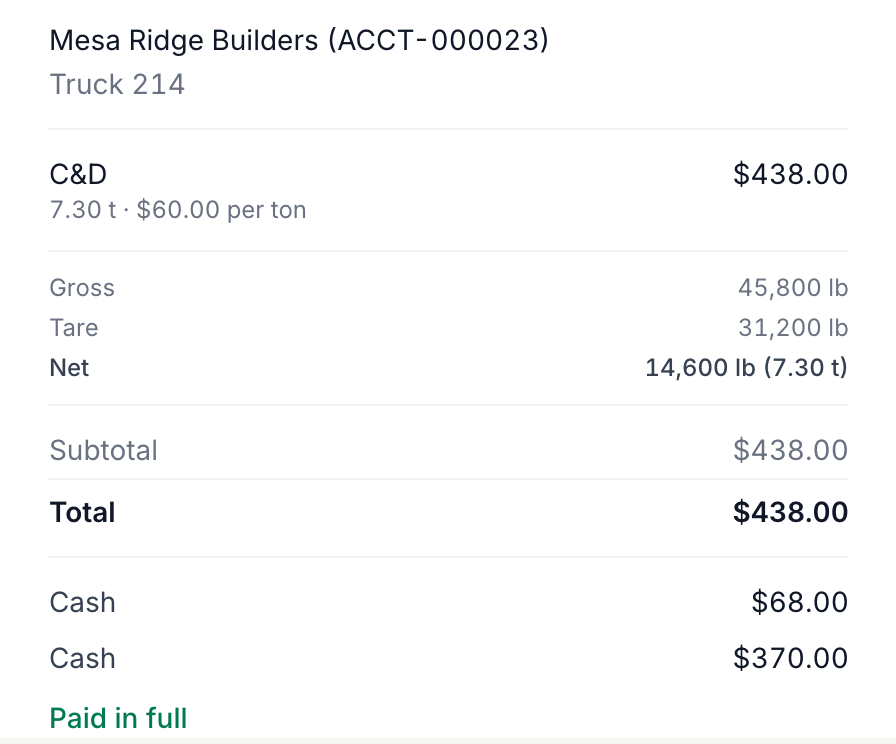
- One screen on the scale house computer, a tablet or a phone: who, what, weight, payment, receipt
- Reads weights straight off your scales, and warns staff the minute a scale stops talking
- Cash drawers, shifts, night counts, deposits and sign-offs
- Card and bank payments at the window, by a link texted to the customer, or a card on file
- A changed ticket needs a manager’s OK, and the original is always kept
The customer and the money
- A website where your customers see invoices, statements and scale tickets, and pay
- Autopay per job site, with a limit the customer sets
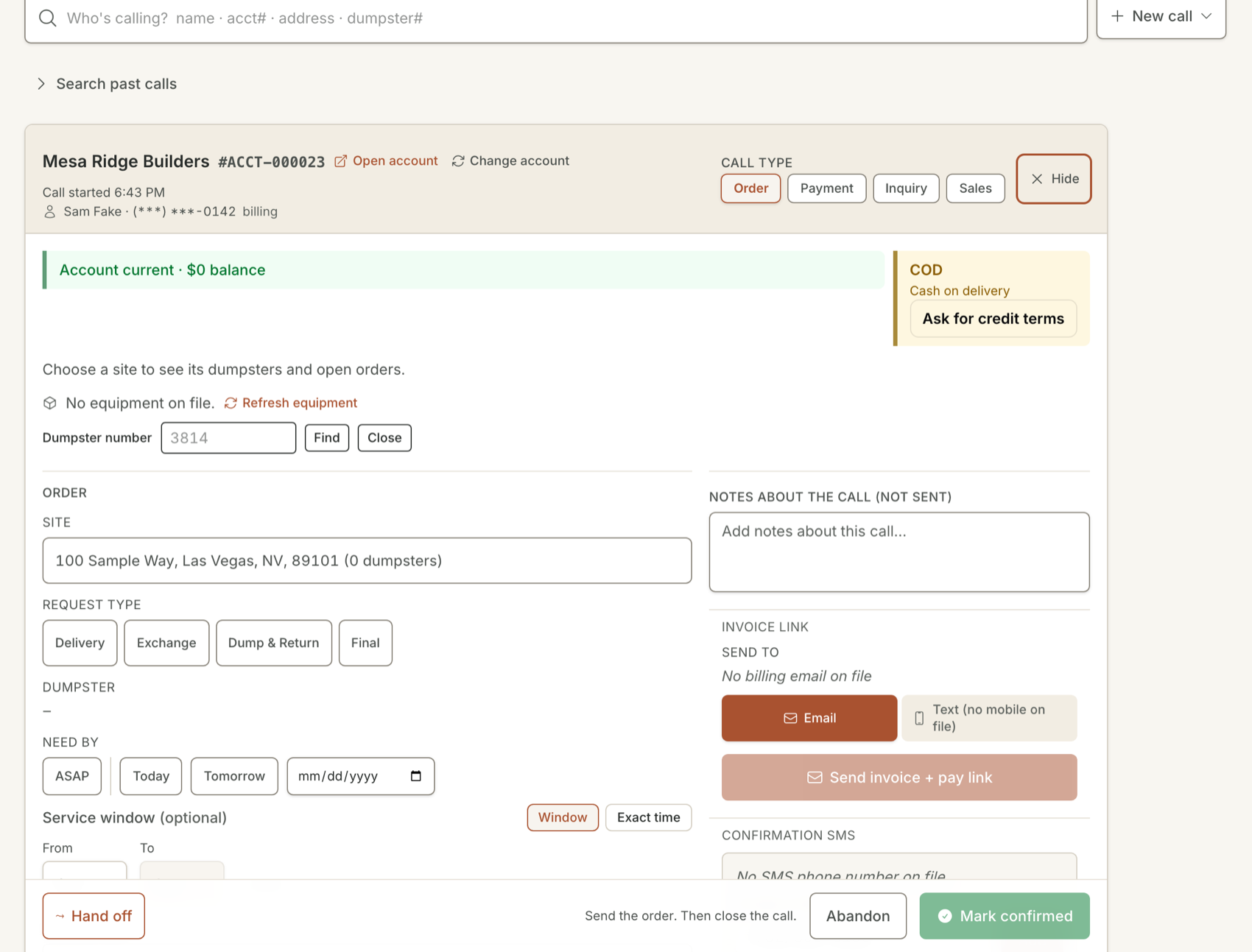
- Quotes, documents to sign and payment links, sent by text or email
- A call log that opens the caller’s account when your rep picks up in Zoom
- Mass texts to customers, one inbox for their replies, and a monthly file for your accounting system
Dispatch, running alongside
- A live map of every truck, with traffic
- The best next job for each truck, a plan for the morning, and a new plan when the day changes
- Your yards and dump sites outlined on the map, night orders, who is driving what today, and how much room is left in each time window
- Today it works beside your dispatcher and learns from what your crews actually do
Plays well with
Connected to the tools you already pay for.
- Zoom
- When your office picks up a call in Zoom, the caller’s account is already on the screen. Texts to and from customers go through Zoom too.
- Wells Fargo
- Card and bank payments through Wells Fargo: typed in, card on file, by text link or online. Deposits and disputed charges are matched up for your office.
- Stripe
- Customers tap a card or phone to pay at the scale window. Being tested now.
- HERE
- The maps: addresses, drive times, routes and live traffic, on your own HERE account.
- Geotab
- Where every truck is, where it has been, and the zones you set up in Geotab, live on the dispatch map.
- Your own AI agent
- If you use an AI assistant like ChatGPT, Claude or Grok, it can look things up in Strata for you. It only sees what you are allowed to see, it can’t change anything until you say so, and every step is recorded.
Not built yet
What Strata doesn't do yet.
You should know this before we talk, not after you sign. If one of these is the thing you need most, tell me. The haulers in the group decide what gets built next.
- Unattended lanes, kiosks and driver self check-in
- License plate reading
- Permits and tonnage caps
- Diversion and LEED reporting
- Paying customers for metal and cardboard by weight
- The Strata Driver app
Pricing
One price, set by your size. Every feature, every user.
Small
Up to 25 trucks and 1 scale site
$1,500 /month
Medium
Up to 75 trucks and 3 scale sites
$3,500 /month
Large
Anything bigger
$6,000 /month
- Any way you run it. On your computers, in your cloud, or hosted by me. Same price.
- Card payments come off it. I earn 0.5% of card payments through Strata, and every dollar of it comes off your price.
- Fair increases only. It rises with inflation, never more than 4% a year.
The license
Every customer gets the source code.
The source code is the blueprint of the software: every instruction it runs on. Having it is like owning the shop manual and the keys, instead of renting a truck with the hood welded shut. Any programmer you hire can read it, fix it or change it. The only thing you can't do is go into the software business selling it. Nobody else in this industry hands you the code.
What the license means for you5 haulers, on purpose
You work with the person who writes the code.
I'm a team of one, and I want to do right by every hauler on Strata. So I'm keeping the group small: 5 operations, each working directly with me. I'm building a company to hand down, not to sell to private equity.
Why I'm building it this wayTell me how your yard runs.
It goes to my inbox, and I read every one myself.
1 of 5 spots taken. 4 open. After that, a waitlist.